Understanding Form EA: Your Annual Tax Guide

Understanding Form EA: Your Annual Tax Guide

Every year, as the calendar turns to January, the Malaysian tax season begins. For both employers and employees, the most significant document during this period is the Form EA.

At HBA Accounting House, we receive many questions about this form. Here is everything you need to know about what it is and the critical timeline you must follow every year.

What is Form EA?

Form EA (also known as the Annual Remuneration Statement) is a document that private-sector employers must prepare for their employees.

It acts as a comprehensive summary of all earnings and deductions for the preceding calendar year (January 1st to December 31st). It includes:

  • Gross Salary & Wages: Your basic pay and overtime.

  • Bonuses & Commissions: Any additional incentives earned.

  • Allowances: Transport, parking, or meal allowances.

  • Statutory Contributions: The total amount of EPF, SOCSO, and EIS deducted.

  • Monthly Tax Deductions (PCB): The total tax already remitted to LHDN on your behalf. 

Why is it used every year? > Employees cannot file their personal income tax (Form BE/B) without the figures from Form EA. It is the "source of truth" used to fill out the LHDN e-Filing system accurately.


The Annual Timeline: Key Dates to Remember

The Form EA cycle follows a strict schedule set by the Inland Revenue Board of Malaysia (LHDN). Mark these recurring dates in your calendar:

Date

Milestone

Responsibility

January 1st

Preparation begins for the previous year's earnings.

Employer / HR

February 28th

The Final Deadline to distribute Form EA to employees.

Employer

March 1st

Individual e-Filing (Form BE) officially opens.

Employee

April 30th

Deadline for employees (without business income) to file taxes.

Employee


Why the February 28th Deadline Matters

By law (Section 83(1A) of the Income Tax Act 1967), employers must provide the Form EA to their employees on or before the last day of February every year.

Failing to meet this deadline is a serious offense. Employers can face fines ranging from RM200 to RM20,000, or even imprisonment, for failing to provide this form to their staff on time.


Summary for Employees

Even if you resigned midway through the year, your former employer is still legally required to issue you a Form EA for the period you were with them. Ensure you gather all your Form EAs if you changed jobs during the year!


Need Professional Tax Assistance?

Staying compliant with LHDN requirements doesn't have to be stressful. At HBA Accounting House, we specialize in payroll management and tax compliance to ensure your business never misses a deadline.


Disclaimer:

The information shared in this post is for general educational and reference purposes only. It does not constitute professional advice. Regulations and requirements may change from time to time. For guidance specific to your situation, please consult with our firm or a qualified professional.

Form E: The Essential Annual Return for Employers

Form E: The Essential Annual Return for Employers

If you own a business in Malaysia, Form E is a mandatory reporting requirement that cannot be ignored. Even if your company is dormant or has no employees, you likely still have a responsibility to file.

What is Form E?

Form E (the Return Form of Employer) is a declaration submitted by an employer to the Inland Revenue Board of Malaysia (LHDN).

Unlike the Form EA, which is handed to your staff, the Form E is submitted directly to LHDN. It serves as a summary of:

  • The total number of employees you had during the year.

  • The total amount of remuneration (salaries, bonuses, etc.) paid.

  • The total amount of Monthly Tax Deductions (PCB/MTD) remitted to LHDN.

  • Confirmation that you have issued Form EA to all your employees.


The "Silent Partner": What is C.P. 8D?

You cannot mention Form E without mentioning C.P. 8D. This is the detailed list of every single employee’s salary and deduction info. For the Form E submission to be considered "complete," you must also submit the C.P. 8D data (usually via the e-Data Praisi system or by uploading a file in the e-Filing portal).


The Annual Timeline: Don't Miss the Grace Period

The timeline for Form E is slightly different from Form EA, providing employers a bit more time to consolidate their data.

Filing Method

Yearly Deadline

Notes

Manual Submission

31st March

Rare now, as LHDN heavily pushes for digital.

e-Filing (e-E)

30th April

LHDN typically provides a 1-month grace period for online submissions.


Important for 2026:

As we look toward the 2026 tax season (reporting for the 2025 calendar year), your digital submission via the MyTax portal must be completed by 30 April 2026.


Who Must File?

A common mistake is thinking you only file if you have taxable employees.

  • Sdn Bhd / Berhad / LLP: Must file every year, even if there are zero employees (a "NIL" return).

  • Sole Proprietors / Partnerships: Must file if they have at least one employee.


The Risk of Non-Compliance

Missing the Form E deadline is a serious offense under the Income Tax Act 1967. Penalties for failing to submit or late submission can range from RM200 to RM20,000, and LHDN can also take legal action against company directors.

Disclaimer:

The information shared in this post is for general educational and reference purposes only. It does not constitute professional advice. Regulations and requirements may change from time to time. For guidance specific to your situation, please consult with our firm or a qualified professional.

How to Check CP500 and Pay?

website (7)


After receiving the CP500 installment notice, not sure how to pay? 😟 Don’t worry! We have compiled detailed steps for your reference! ✅


老板们收到CP500分期通知后不清楚要怎么支付?😟 别担心!我们整理了详细步骤让你们参考!✅


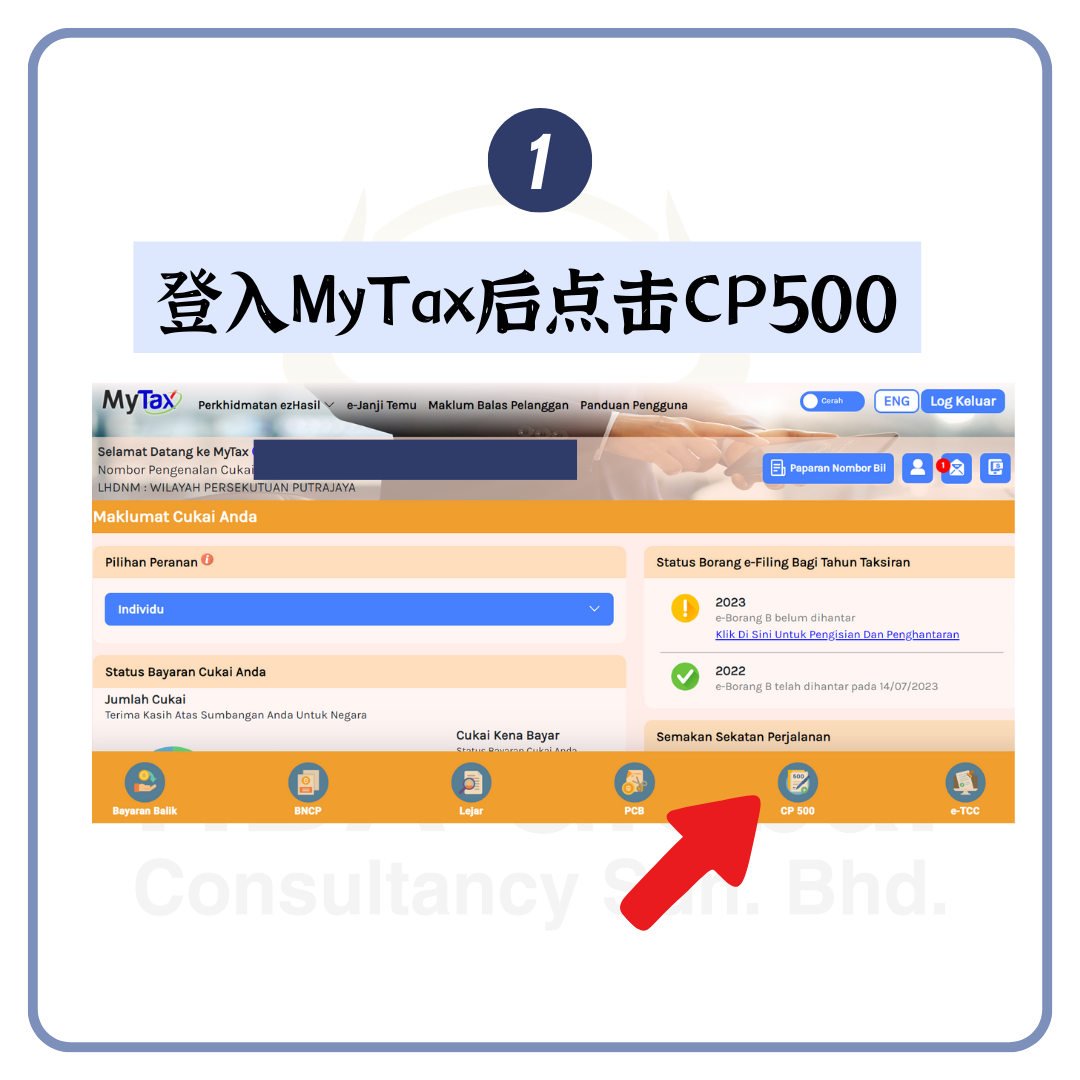
 Step 1 第一

 After logging into MyTax, click CP500

2

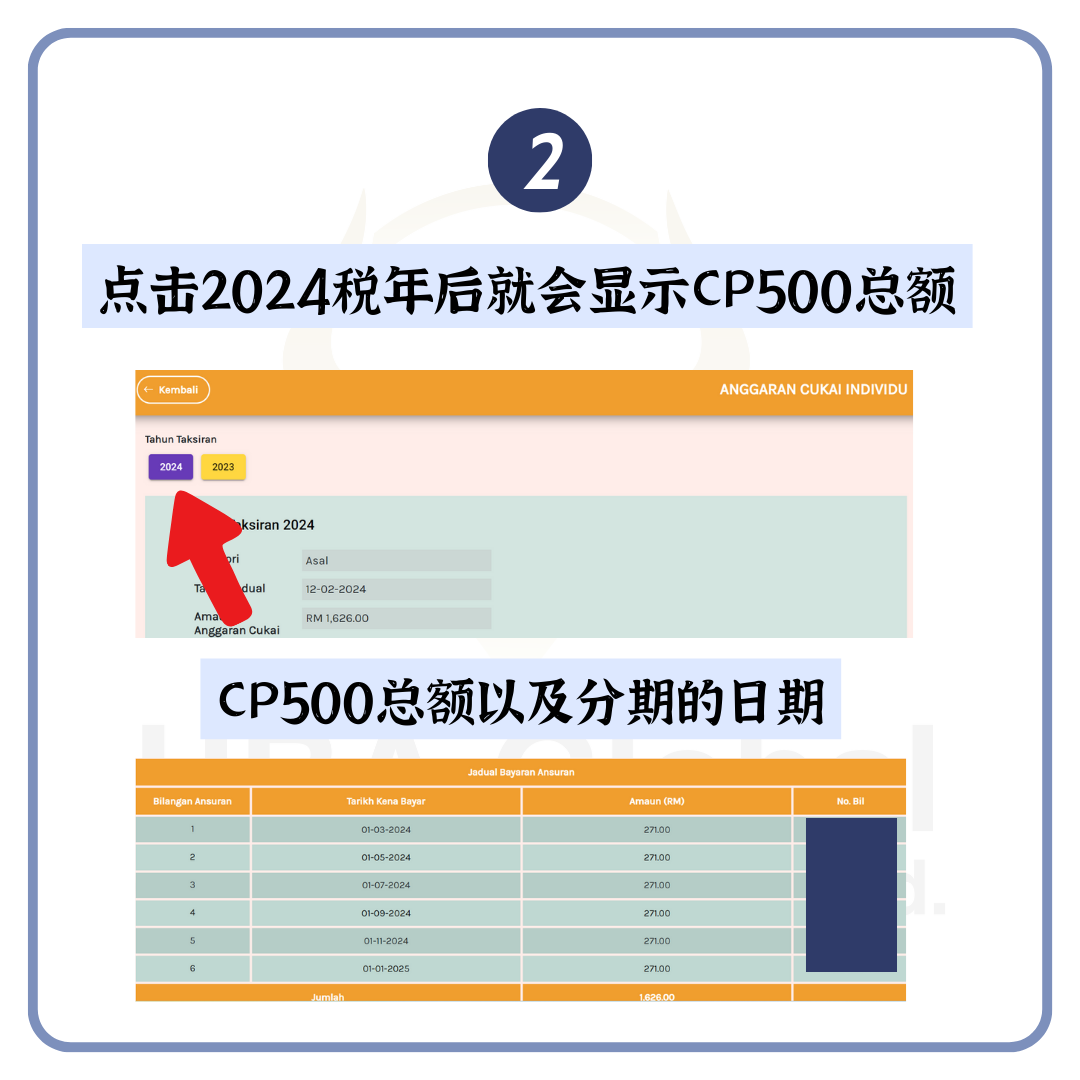
 Step 2 第一

Click on the 2024 tax year and the total CP500 installment date will be displayed.

3

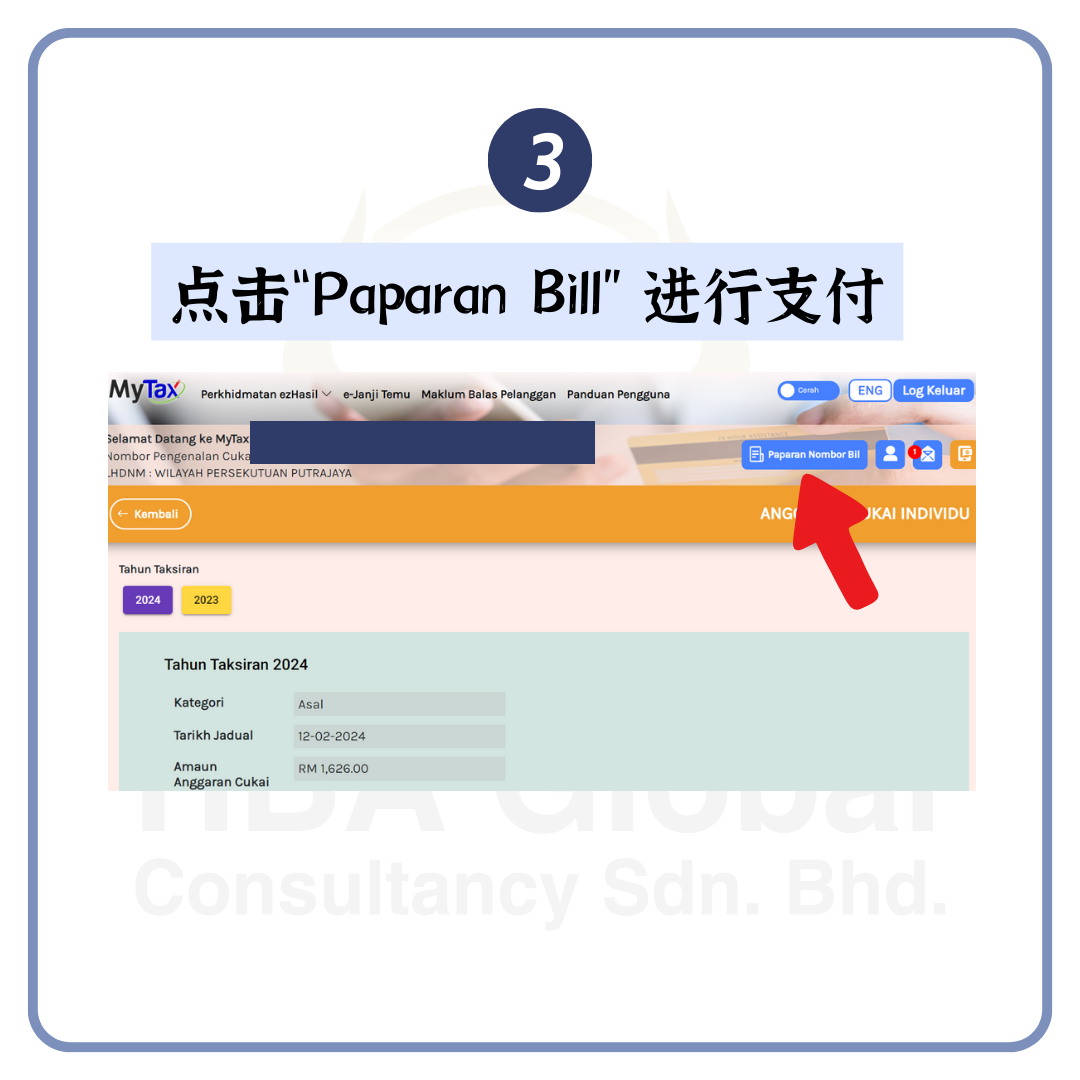
 Step 3 第三

Click "Paparan Bill" to pay

4

 Step 4 第四

Click on the bill you want to pay. After confirmed the amount, click "Teruskan".

5

 Step 5 第五

After checking that the information and amounts are correct, click "Teruskan"

6

 Step 6 第六

After selecting the payment method, click "Teruskan"

7

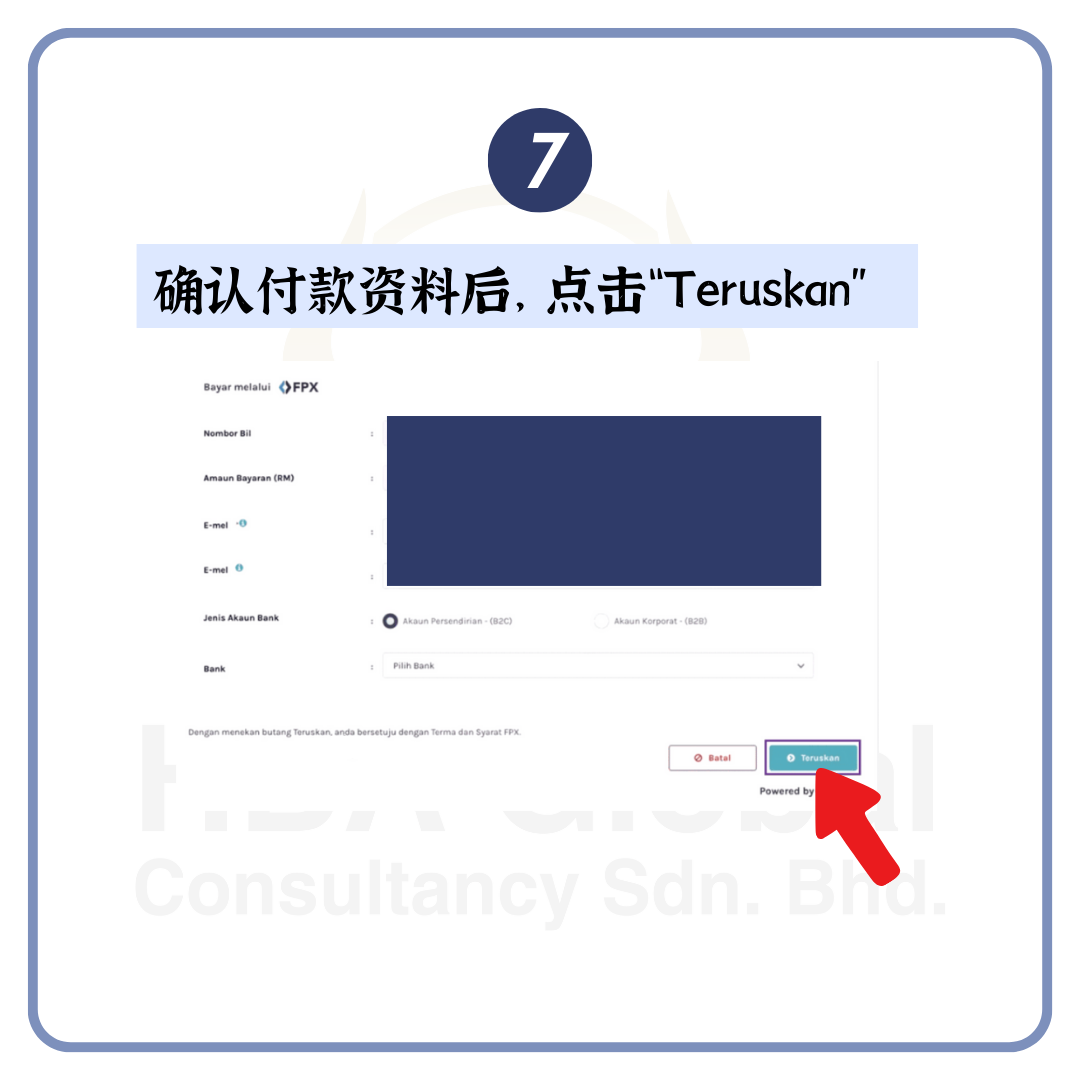
 Step 7 第六

After confirming the payment information, click "Teruskan"

8

 Step 8 第八

The payment is successful if you come to this page!

9

Malaysia e-Invoice 最新更新(2025):门槛提高至 RM1,000,000,中小企业需要知道什么?

Malaysia e-Invoice 最新更新(2025):门槛提高至 RM1,000,000,中小企业需要知道什么?

一、最新宣布:e-Invoice 门槛正式提高

马来西亚内陆税收局(LHDN)近日宣布,电子发票(e-Invoice)强制实施门槛将提高

📌 最新门槛

  • 年营业额(Annual Sales)低于 RM1,000,000
    👉 暂时 不需要 强制实施 e-Invoice

  • 年营业额 RM1,000,000 或以上
    👉 将根据 LHDN 时间表,必须落实 e-Invoice 系统

此项调整预计自 2026 年起生效,对许多中小企业(SME)来说,是一项重要缓冲措施。

二、e-Invoice 最新实施时间表(重点版)

适用于 年营业额 ≥ RM1,000,000 的企业:

Annual Turnover ≥ RM1m in YA

e-Invoice Implementation Date

YA 2022

1 January 2026

YA 2023, YA 2024 & YA 2025

1 July 2026

YA 2026 onwards

1 January of the second following year

📌 举例说明
若企业在 2026 年 12 月 31 日 才超过 RM1,000,000,
➡ e-Invoice 将从 2028 年 1 月 1 日 开始实施。

⚠ 特别注意:关联公司(Related Company)规则

即使你的公司本身 年营业额低于 RM1,000,000
但若 关联公司

  • 已实施 e-Invoice,或

  • 被要求于 2026 年 1 月 1 日或 7 月 1 日 实施 e-Invoice

👉 你的公司也 必须从 2026 年 7 月 1 日起实施 e-Invoice

三、MyInvois e-POS 使用资格放宽

为了协助小型商家与零售业者:

  • MyInvois e-POS 适用门槛
    RM1,000,000 提高至 RM2,000,000 年营业额以下

对餐饮、零售、小商家而言,实施门槛更低、操作更简化。

四、低于 RM1,000,000 就可以完全不用理 e-Invoice 吗?

不建议这样想。

即使你目前未达到强制门槛,仍有 3 个关键现实必须注意:

1️⃣ 客户可能已实施 e-Invoice

若你的客户是大型企业或集团,他们可能会 要求你配合 e-Invoice,否则影响合作或付款流程。

2️⃣ 公司成长后仍必须落实

一旦营业额突破 RM1,000,000,若没有提前准备,落实过程将会非常仓促,甚至影响营运。

3️⃣ 未来政策仍可能调整

税务数字化是长期方向,门槛与时间表仍有可能再调整。

五、哪些企业应该“提前准备” e-Invoice?

我们通常建议以下企业不要等到被强制才行动

  • 预计 1–2 年内营业额会成长

  • 正在申请融资 / 银行贷款

  • 与大型企业、跨国公司合作

  • 希望提升公司财务透明度与专业形象

  • 正在进行会计系统升级或数字化转型

提前准备 ≠ 马上全面实施
而是 规划流程 + 选对系统 + 培训团队

六、现在可以做的 4 个准备步骤

Step 1:评估公司营业额与成长趋势
看看你是否接近 RM1,000,000 门槛。

Step 2:检查现有发票与会计流程
是否仍依赖手写、Excel 或零散系统?

Step 3:了解 e-Invoice 基本要求
包括:发票格式、数据字段、系统对接方式。

Step 4:咨询专业团队
在合规、成本与效率之间,找到最适合你公司的方案。

七、结语:门槛提高,是机会不是放松

e-Invoice 门槛的提高,不是让企业“什么都不做”,而是给你一个更好的时间窗口去规划。

越早准备,
✔ 成本越低
✔ 风险越小
✔ 转型越顺

Latest Malaysia e-Invoice Update (2025): Threshold Increased to RM1,000,000

Latest Malaysia e-Invoice Update (2025): Threshold Increased to RM1,000,000 – What Businesses Need to Know

1. Latest Announcement: e-Invoice Threshold Increased

The Inland Revenue Board of Malaysia (LHDN) has recently announced an important update to the mandatory e-Invoice implementation.

📌 Updated Threshold

  • Annual sales below RM1,000,000
    👉 Temporarily exempted from mandatory e-Invoice implementation

  • Annual sales of RM1,000,000 and above
    👉 Required to implement e-Invoice in accordance with LHDN’s rollout timeline

This updated threshold is expected to take effect from 2026, providing relief for many small and medium-sized enterprises (SMEs).

2. Updated e-Invoice Implementation Timeline

For businesses with annual turnover ≥ RM1,000,000, the implementation dates are as follows:

Annual Turnover ≥ RM1m in YA

e-Invoice Implementation Date

YA 2022

1 January 2026

YA 2023, YA 2024 & YA 2025

1 July 2026

YA 2026 onwards

1 January of the second following year


📌 Example:

If a company exceeds RM1,000,000 turnover on 31 December 2026,

👉 e-Invoice implementation starts on 1 January 2028.


⚠ Important Note on Related Companies


If a company’s turnover is below RM1,000,000, but its related company:

  • has already implemented e-Invoice, or

  • is required to implement e-Invoice on 1 January 2026 or 1 July 2026,

👉 the company will also be required to adopt e-Invoice from 1 July 2026, despite being below the threshold.


3. MyInvois e-POS Eligibility Expanded

Good news for small retailers and F&B businesses:

  • MyInvois e-POS eligibility has increased

  • From RM1,000,000 → RM2,000,000 annual turnover

This makes compliance easier for smaller businesses with simpler transaction needs.

4. Does Being Below RM1,000,000 Mean You Can Ignore e-Invoice?

Not recommended.

Even if your business is currently exempt, there are several practical considerations:

1️⃣ Your customers may already require e-Invoice

Large companies or corporate clients may require suppliers to issue e-Invoices for compliance and audit purposes.

2️⃣ Business growth will trigger future compliance

Once your annual revenue exceeds RM1,000,000, e-Invoice implementation will become mandatory. Preparing late may disrupt operations.

3️⃣ Policies may continue to evolve

Tax digitalisation is a long-term national direction. Thresholds and timelines may be revised again.

5. Which Businesses Should Start Preparing Early?

We strongly recommend early preparation if your business:

  • Expects revenue growth in the next 1–2 years

  • Is applying for bank financing or investor funding

  • Works with large corporations or multinational companies

  • Wants better financial transparency and professional reporting

  • Is upgrading its accounting or ERP systems

Early preparation does not mean immediate full implementation it means planning wisely.

6. 4 Practical Steps to Prepare for e-Invoice

Step 1: Review your revenue trend
Assess whether your business is approaching the RM1,000,000 threshold.

Step 2: Review your invoicing and accounting process
Identify reliance on manual, Excel-based, or fragmented systems.

Step 3: Understand basic e-Invoice requirements
Learn about required invoice fields, formats, and system integration.

Step 4: Seek professional advice
Choose a solution that balances compliance, cost, and operational efficiency.

7. Conclusion: Higher Threshold Means Opportunity, Not Inaction

The increase in the e-Invoice threshold is not a reason to delay preparation — it is an opportunity to plan properly.

Early preparation leads to:
✔ Lower implementation costs
✔ Reduced compliance risks
✔ Smoother business operations

Avoid Late Stamp-Duty Penalties — What You Must Do Before Year End – Illustration

website (55)


1
2
3
4

Avoid Late Stamp-Duty Penalties — What You Must Do Before Year End

website (55)


🇲🇾 Malaysia Companies: Avoid Late Stamp-Duty Penalties — What You Must Do Before Year End ⚠️

中文版本

图画版本

As the year comes to an end, many businesses are rushing to finalize contracts and employee agreements. One of the most common mistakes companies repeat every year is forgetting to settle stamp duty on time, which often results in unnecessary penalties.

To help you avoid last-minute stress and extra costs, here are the 3 most important stamp duty rules you must follow.

  1. Contracts Signed in 2025 Must Be Stamped Before 31 December

If your business has signed any agreements this year — including service contracts, tenancy agreements, or supplier contracts — they must be stamped before the end of the year.


Stamping Timeline

Outcome

Stamped before 31 December

✔ No penalty – fully compliant

Stamped after 31 December

✖ Late stamping – penalty will apply


Avoid delaying until next year, as the penalty is automatic and unavoidable.


  2. New Employee Contracts from 2026 Must Be Stamped Within 30 Days of Signing 

If your business has signed any agreements this year — including service contracts, tenancy agreements, or supplier contracts — they must be stamped before the end of the year.

This new requirement often confuses HR and Admin teams.

It is not based on month end, and not “anytime within the year”.
The rule is precise:

Stamping must be completed within 30 days from the signing date of the employment contract.

Failing to do so will trigger late stamping penalties.


3. New Stamp Duty Exemption Threshold from 2026 — RM300 ➜ RM3,000

Good news for SMEs:

Beginning 2026, the exemption limit will be increased significantly.


Value of Contract

Stamp Duty Requirement

Below RM3,000

✖ Exempted from stamp duty

RM3,000 and above

✔ Stamp duty applicable


This adjustment allows HR and Admin departments to save more when handling small-value agreements, especially for temporary staff, part-timers, or low-value supplier contracts.


Summary for HR & Admin


Rule

Effective Period

Requirement

Stamping deadline for 2025 contracts

Before 31 December 2025

Must be stamped this year

Stamping for new employee contracts

From 2026 onwards

Must be stamped within 30 days of signing

Stamp duty exemption threshold

From 2026 onwards

Increased from RM300 to RM3,000


Keeping track of stamp duty compliance not only protects the company legally but also prevents unnecessary penalties and cash outflow.

马来西亚 2025 课税年度个人所得税减免项目

website (53)

马来西亚 2025 课税年度个人所得税减免项目

图画版本【点这里】


个人

减免金额

个人

RM9,000

教育与技能提升费用

  • 高等教育或自我提升课程(自我提升限 RM2,000,延长至2026年)

RM 7,000

残障人士

RM 7,000

首次购屋者住房贷款利息

*买卖协议必须在2025年1月1日至2027年12月31日期间签订。

1)RM7,000: 房价少于RM500,000

2)RM5,000: 房价于RM500,000 to RM750,000之间

生活与家庭

减免金额

严重疾病医疗费用

包括

  • 已婚夫妇生育治疗费用

  • 全面体检(限额 1,000 马币)

  • 疫苗接种费用(限额 1,000 马币)

  • 学习障碍儿童费用(限额 6,000 马币)

    • 如自闭症、ADHD、唐氏综合症

  • 牙科检查或治疗(本人、配偶或子女)

  • 新冠病毒检测(限额 1,000 马币)

  • 心理健康筛查(限额 1,000 马币)

  • 诊断测试(限额 1,000 马币)

  • 购买自测医疗设备(限额 1,000 马币)

RM 10,000

体育相关 (本人、配偶、父母或子女)

  • 本人、配偶、父母或子女

  • 购买体育器材

  • 体育设施租赁/入场费

  • 体育比赛报名费

  • 健身房会员费

  • 体育训练费

RM1,000


生活相关

  • 阅读材料

  • 智能手机、平板电脑、电脑

  • 网络费用

  • 技能提升/个人发展课程费用

RM 2,500

电动车充电设备与厨余堆肥机

  • 电动车充电设备包括安装、租赁、分期付款或订阅费

  • 家用厨余垃圾堆肥机

  • 评估后三年内只能申请一次

RM 2,500

父母

减免金额

配偶或赡养费

  • 无收入配偶或

  • 依法赡养前妻(需协议)

RM 4,000

残障配偶

RM6,000

父母及祖父母医疗费用

  • 包括医疗费用、特殊需求或护理费用

  • 体检(限RM1,000)

RM 8,000

子女

减免金额

未满18岁未婚子女

RM 2,000

18岁以上在学未婚子女

  • 全日制A-Level、证书、大学预科课程

RM 2,000

18岁以上在学未婚子女

  • 本地:文凭或以上

  • 海外:学士或以上

RM 8,000


哺乳设备

  • 仅限有2岁以下子女

  • 职业女性

  • 每两年可申报一次

RM1,000


幼儿园与托儿所费用

  • 适用于6岁及以下儿童

  • 须注册于社会福利局或教育部

RM 3,000

国家教育储蓄计划(SSPN)净储蓄

  • 为子女储蓄可扣除

RM 8,000

残障子女(18岁以下)

RM8,000

保险与公积金供款

减免金额

人寿保险或自付EPF

RM 3,000

教育或医疗保险

RM 4,000

社保与就业保险 SOCSO & EIS

RM350


雇员公积金附加减免 EPF

RM 4,000


私人退休计划与延期年金 PRS

RM 3,000

Malaysia Personal Income Tax Reliefs YA 2025 (Illustration)

website (53)
6
_tax relief (3)

Malaysia Personal Income Tax Reliefs YA 2025

website (53)

Malaysia Personal Income Tax Reliefs YA 2025

中文版本【点这里】

图画 / Illustrate【点这里】

Individual

Amount Relief

Individual 

RM9,000

Education

  • Education fee for tertiary level or postgraduate level

  • Personal upskilling / self-enhancement course (Limit to RM2,000) [Extended to Y.A. 2026]

RM 7,000

Disabled Individual

RM 7,000

Interest on Housing Loans for First-time Homeowners

*Sales and Purchase Agreement must be executed from 1 January 2025 until 31 December 2027

1)RM7,000: House Price Less than RM500,000

2)RM5,000: House Price Between RM500,000 to RM750,000

Lifestyle & Family

Amount Relief

Medical Expenses on Serious Diseases

Including:

  • Cost of fertility treatment for married couples

  • Complete medical examination (Limit to RM 1,000)

  • Vaccination expenses (Limit to RM 1,000)

  • Expenses for children with learning disabilities (Limit to RM 6,000)

    • Autism

    • Attention Deficit Hyperactivity Disorder (ADHD)

    • Global Developmental Delay (GDD)

    • Intellectual Disability

    • Down Syndrome

    • Specific Learning Disabilities

  • Dental examination or treatment

    • Dental practitioners registered with Malaysian Dental Council

    • For self, spouse or child

  • Covid-19 Test (Limit to RM 1,000)

  • Mental Health Screening (Limit to RM 1,000)【NEW】

  • Diagnostic Test (Limit to RM 1,000) 【NEW】

  • Purchase of Self-Test Medical Devices (Limit to RM 1,000)

RM 10,000

Sport Related (For self, spouse, parents or child)

  • Purchase of sports equipment

  • Rental/entry fees for sports facilities

  • Registration fees in sports competition

  • Gym membership

  • Sports training fees

RM1,000


Lifestyle

  • Books & Magazines

  • Computer & smartphone & Tablet

  • Broadband/Internet Subscription

  • Self skill enhancement courses

RM 2,500

Expenses related to Electric Vehicle (EV) charging facilities & Purchasing Food Waste Composting Machines

  • For Electric Vehicle (EV) charging facilities including installation, rental, hire-purchase of equipment or subscription fees [Extended to year 2027]

  • Food waste composting machines for household use

  • Can only be claimed once within 3 years of assessment

RM 2,500

Parents

Amount Relief

Spouse / Alimony

  • For spouse without income

  • Alimony to former wife (Agreement needed)

RM 4,000

Disabled Spouse

RM6,000

Medical expenses for Parents & Grandparent

  • Including medical treatment expenses, special needs or care expenses

  • Complete medical examination (limit to RM1,000)

RM 8,000

Child

Amount Relief

Unmarried Child aged below 18 years old

RM 2,000

Unmarried Child aged above 18 years old (Student)

  • Full Time student A-Level", 

  • Certificate, matriculation or preparatory courses

RM 2,000

Unmarried Child aged above 18 years old (Student)

  • Domestic - diploma or above

  • Abroad - degree or above

RM 8,000


Breastfeeding Equipment

  • Only applicable to working women with child aged under 2 years

  • Claim once every 2 years

RM1,000


Fees paid to childcare centres and kindergartens

  • Only for child aged 6 and below

  • Childcare centres or kindergartens registered with the Department of Social Welfare (SWD) or Ministry of Education (MOE).

RM 3,000

Net saving in SSPN’s scheme

  • Net saving in National Education Saving Scheme (SSPN) for child

RM 8,000

Disabled Child (For Child aged under 18)

RM8,000

Insurance & Contributions

Amount Relief

Life Insurance / EPF Contributions

RM 3,000

Education or Medical Insurance

  • Insurance premium for education or medical benefit

RM 4,000

SOCSO & EIS

RM350


EPF

RM 4,000


PRS

  • Private Retirement Scheme (PRS) contributions and Deferred annuity scheme premium

  • Extended to Y.A. 2025

RM 3,000