
Sustainability Reporting in Malaysia: What Businesses Need to Know About ESG, NSRF and the Latest 2026 Developments
Published: August 2026
Sustainability reporting is becoming an increasingly important part of doing business in Malaysia.
For many business owners, terms such as ESG, sustainability reporting, IFRS S1, IFRS S2, carbon emissions and NSRF may still sound like requirements meant only for large listed companies.
However, Malaysia is gradually moving towards a more structured sustainability reporting environment.
The introduction of the National Sustainability Reporting Framework (NSRF), together with the latest 2026 proposals by the Companies Commission of Malaysia (SSM) concerning sustainability reporting under the Companies Act 2016, signals an important direction for Malaysian businesses.
So, what exactly is sustainability reporting, who is affected, and should SMEs start preparing?
What Is Sustainability Reporting?
Sustainability reporting is the process through which a company communicates information about sustainability-related matters, including the risks, opportunities and impacts associated with its business activities.
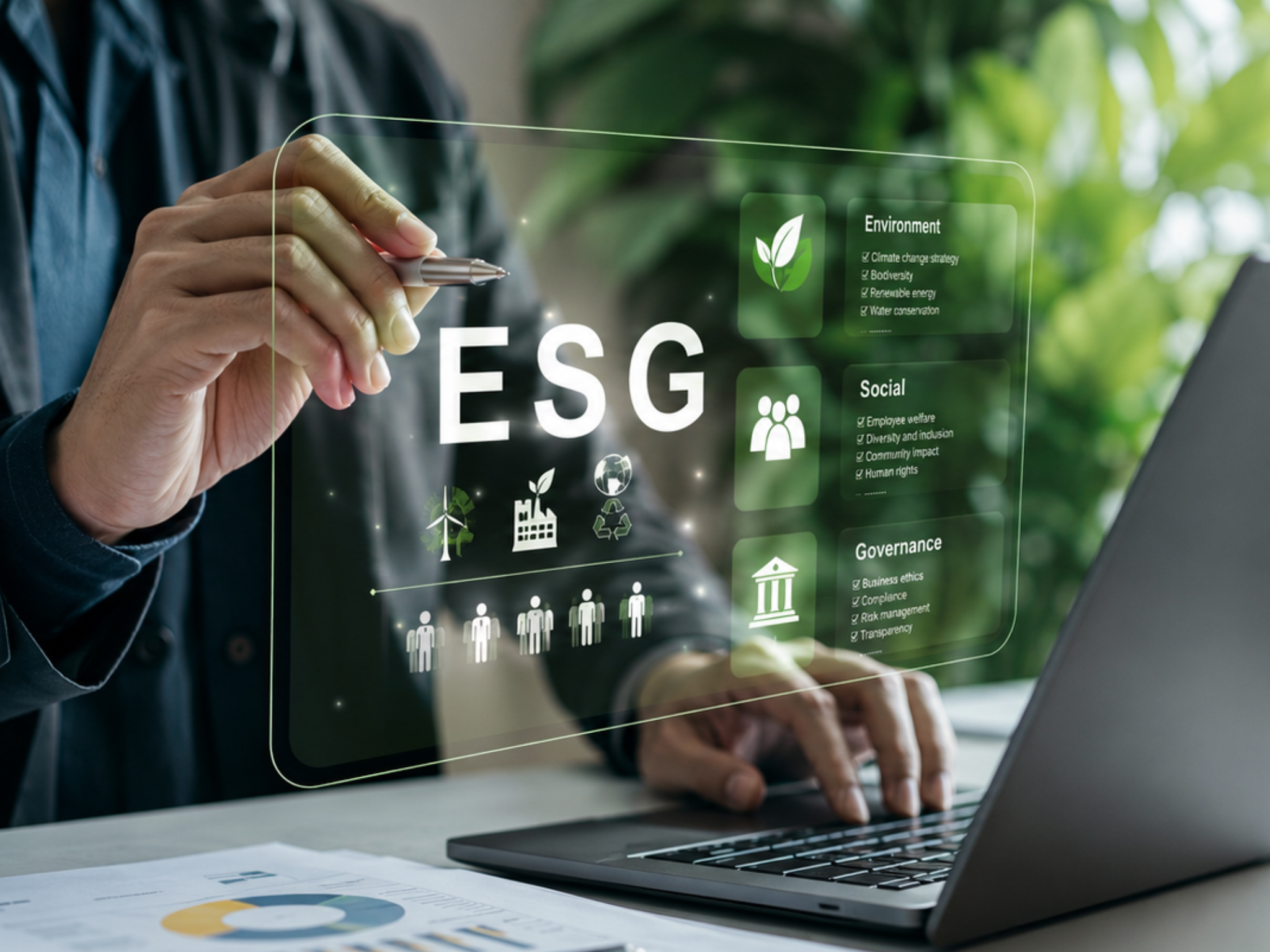
Depending on the reporting framework being used, this can involve areas such as:
Environmental
Greenhouse gas emissions
Energy consumption
Waste management
Water usage
Climate-related risks
Resource efficiency
Social
Employee welfare
Workplace health and safety
Diversity and inclusion
Human rights
Community impact
Supply-chain practices
Governance
Corporate governance
Risk management
Business ethics
Internal controls
Anti-corruption practices
Board oversight
Internationally, companies use different sustainability reporting standards and frameworks, including ISSB, GRI, ESRS, CDP and SASB.
In Malaysia, however, the ISSB Standards have become particularly important because they form the baseline under the NSRF.
What Is Malaysia's National Sustainability Reporting Framework (NSRF)?
Malaysia's National Sustainability Reporting Framework (NSRF) establishes the country's approach towards sustainability-related disclosures.
The framework uses sustainability disclosure standards issued by the International Sustainability Standards Board (ISSB) as its baseline, specifically:
IFRS S1 — General Requirements for Disclosure of Sustainability-related Financial Information
and
IFRS S2 — Climate-related Disclosures
The objective is to improve the consistency, comparability and reliability of sustainability information provided by Malaysian companies.
This is important because sustainability reporting is increasingly being viewed alongside traditional financial information.
Investors, lenders and other stakeholders increasingly want to understand not only:
"How profitable is this company?"
but also:
"What sustainability and climate-related risks could affect this company financially in the future?"
The NSRF therefore aims to establish a more consistent reporting approach while improving Malaysia's competitiveness and attractiveness to investors.
Securities Commission Malaysia — National Sustainability Reporting Framework
What Are IFRS S1 and IFRS S2?
These two standards form the foundation of Malaysia's NSRF.
IFRS S1
IFRS S1 focuses broadly on sustainability-related risks and opportunities that could reasonably affect a company's prospects.
This helps businesses consider how sustainability issues may influence areas such as:
Cash flow
Access to financing
Cost of capital
Business operations
Long-term financial performance
IFRS S2
IFRS S2 focuses specifically on climate-related risks and opportunities.
For example, businesses may need to consider:
Greenhouse gas emissions
Climate-related physical risks
Changes in regulation
Transition towards lower-carbon operations
Climate-related business opportunities
Malaysia's framework is intentionally being introduced through a phased and developmental approach, recognising that businesses have different levels of readiness, resources and sustainability reporting experience.
Who Is Currently Covered Under the NSRF?
Under the NSRF, implementation is divided into three main groups.
For non-listed companies under the original NSRF scope, the threshold is generally consolidated group revenue of RM2 billion and above for two consecutive financial years preceding the current financial year. Where consolidated accounts are not required, the threshold is applied at company level.
The adoption dates are set out in the NSRF as 1 January 2025 for Group 1, 1 January 2026 for Group 2, and 1 January 2027 for Group 3.
🚨 2026 Update: SSM Is Looking at Sustainability Reporting Under the Companies Act
This is one of the developments Malaysian private companies should pay attention to.
On 30 April 2026, SSM issued a Consultative Document on the Proposed Amendments to the Companies Act 2016 [Act 777] on Sustainability Reporting. A revised Section F was subsequently issued on 22 May 2026, and the consultation deadline was extended to 16 June 2026.
SSM — Proposed Amendments to the Companies Act 2016 on Sustainability Reporting
The important word here is "proposed."
This consultation should not be interpreted as meaning that every Malaysian SME is already legally required to prepare a sustainability report today.
Instead, it indicates that Malaysia is working towards establishing a broader legal foundation for sustainability reporting.
This matters because the reporting landscape may eventually extend beyond the largest listed and non-listed companies currently captured under the NSRF.
Does This Mean SMEs Need to Prepare Sustainability Reports Now?
Not necessarily.
Under the existing NSRF scope, many ordinary Malaysian SMEs are not directly captured by the RM2 billion large non-listed company threshold.
However, that does not mean SMEs should completely ignore sustainability reporting.
There is a difference between:
"Am I legally required to report?"
and
"Will my business increasingly be asked for sustainability information?"
The second question is becoming increasingly relevant.
Why Sustainability Reporting Can Still Affect SMEs
Even where an SME is not directly subject to mandatory sustainability reporting, it may operate within the supply chain of a larger company.
The NSRF itself specifically recognises that non-listed companies form an integral part of broader supply chains.
This can create a knock-on effect.
For example, a larger customer may need information from its suppliers concerning:
Electricity consumption
Fuel consumption
Carbon emissions
Waste management
Environmental policies
Employee practices
Supply-chain standards
Internationally, sustainability information is also increasingly relevant to procurement, access to capital, corporate reputation and business relationships.
Therefore, even if your SME does not need to issue a formal sustainability report today, your customers, investors, lenders or multinational partners may increasingly ask you for sustainability-related data.
Understanding Scope 1, Scope 2 and Scope 3 Emissions
One area businesses are likely to encounter frequently is greenhouse gas or GHG emissions reporting.
Scope 1 — Direct Emissions
These are emissions directly generated by sources owned or controlled by the company.
Examples may include fuel consumed by company vehicles or certain equipment.
Scope 2 — Purchased Energy
These are indirect emissions associated with purchased electricity or other forms of acquired energy used by the business.
Scope 3 — Value Chain Emissions
Scope 3 generally covers other indirect emissions occurring across the company's value chain.
This is particularly relevant to SMEs.
If an SME supplies goods or services to a larger company, information relating to the SME's activities could potentially contribute to that larger company's Scope 3 calculations.
Under Malaysia's NSRF, transitional reliefs have also been provided because Scope 3 data can be significantly more challenging to collect.
Sustainability Reporting Is Becoming More Like Financial Reporting
One major direction of sustainability reporting is towards greater consistency, reliability and comparability.
Traditional ESG reports were sometimes largely narrative:
"We care about the environment."
"We support our employees."
"We are committed to sustainability."
Modern sustainability reporting increasingly expects businesses to support statements with measurable information.
For example:
This is one reason sustainability information is increasingly intersecting with the work of finance, accounting, risk management and internal control teams, rather than being treated purely as a marketing exercise.
PwC similarly describes ESG reporting as requiring companies to gather and report relevant non-financial information and to establish processes for obtaining the required data.
External Assurance Is Also Coming Into the Picture
Another important development is assurance.
The NSRF explains that external assurance is intended to improve the reliability of sustainability disclosures and address concerns around greenwashing.
Its stated aim is reasonable assurance over Scope 1 and Scope 2 GHG emissions, beginning with Group 1 from annual reporting periods starting on or after 1 January 2027, followed by Group 2 in 2028 and Group 3 in 2029. However, the framework notes that the mandatory assurance timeline remains subject to further consultation.
In practical terms, sustainability information is moving towards a world where businesses may increasingly need to document, measure and substantiate what they report.
What Should Malaysian SMEs Start Doing?
For most SMEs, there is no need to immediately produce a complicated 50-page ESG report.
A better starting point is to build the underlying data and processes.
Businesses can begin by:
Identify the sustainability issues relevant to the business
Consider energy, waste, employees, supply chains, governance and climate-related risks.Start collecting basic data
Electricity bills, fuel usage, waste records, employee information and other relevant operational data are good starting points.Determine what customers are asking for
Companies supplying multinational corporations or larger listed companies should pay particular attention to ESG questionnaires and supplier requirements.Establish responsibilities internally
Sustainability reporting should not belong to one department alone. Finance, HR, operations, procurement and management may all contribute data.Keep proper supporting records
Just as accounting figures require supporting documents, sustainability information should also be traceable and supportable.Follow regulatory developments
Businesses should continue monitoring developments involving the NSRF, SSM, Bursa Malaysia and other relevant regulators.
A materiality assessment can also help businesses identify which sustainability issues are most relevant instead of attempting to measure everything at once.
The Direction Is Clear: Sustainability Data Is Becoming Business Data
For many SMEs, sustainability reporting may still feel like something for the future.
But Malaysia's NSRF and the latest 2026 SSM consultation indicate that sustainability disclosure is becoming increasingly integrated into the country's corporate reporting framework.
The NSRF itself provides for amendments across relevant legislation, rules and guidelines, including the Financial Reporting Act 1997, Companies Act 2016, securities legislation and Bursa Malaysia Listing Requirements.
The practical takeaway for business owners is therefore not to panic—but also not to wait until reporting becomes mandatory before organising the necessary information.
Companies that begin building proper records, internal controls and sustainability data today may find it much easier to respond when customers, banks, investors or regulators request this information later.
Need Help Preparing Your Business for Better Reporting?
Sustainability reporting increasingly connects financial reporting, internal controls, data management and business compliance.
HBA Global Consultancy can assist businesses in strengthening their accounting records, management reporting and internal processes so that important business information is better organised and ready for evolving reporting requirements.
📞 Contact Us to learn more about how your business can improve its reporting and compliance readiness.
Disclaimer
This article is provided for general informational purposes only and does not constitute legal, ESG, sustainability, accounting or other professional advice.
Malaysia's sustainability reporting framework continues to evolve. In particular, SSM's 2026 proposed amendments to the Companies Act 2016 discussed above were issued as a consultation proposal and should not be interpreted as final legislation or as imposing the proposed requirements on all Malaysian companies at the date of this article.
Businesses should refer to the latest requirements and announcements issued by the Securities Commission Malaysia, SSM, Bursa Malaysia and other applicable regulators, and seek professional advice where necessary.